Remediation: Ortec-Soléo Mobilized on an Industrial Brownfield in Oissel (76)


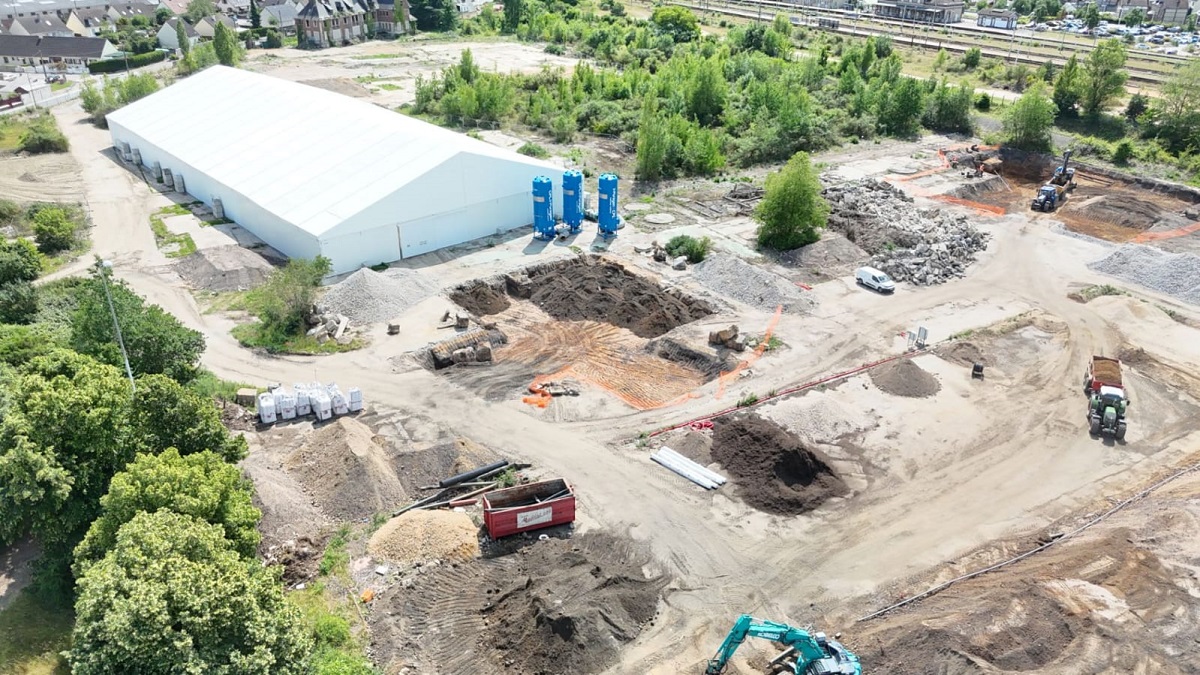
Ortec-Soléo is carrying out a large-scale remediation operation in Normandy on the former Orgachim pesticide production site, for its redevelopment. The operation aims to rehabilitate this urban site, which presents significant environmental challenges.
Preliminary environmental studies identified the priority zones and enabled the treatment techniques to be adjusted to the site’s future uses. The historical context of the site, as it was bombed during World War II, required pyrotechnic support during earthworks. The contamination identified included volatile hydrocarbons, chlorinated solvents, and residues linked to the former pesticide manufacturing activity. A six-week preparation phase was used to organize the site facilities and logistics before the start of the main works, scheduled over eight months.
Complementary and High-Performance Remediation Processes
To treat the different sources of contamination, the project combines several techniques:
- Earthworks and optimized management of soil movements on a constrained site, requiring detailed organization: up to five biopiles operated simultaneously in a true technical “musical chairs” setup. The topsoil temporarily removed will be reused at the end of the project, after the treated soils are returned to the excavated areas.
- Ventilated biopile in a containment tent for the most contaminated materials, particularly those containing volatile compounds, ensuring containment and health protection for local residents.
- In-situ venting for deep contamination: 178 venting wells extract volatile compounds directly from the subsoil, without large-scale excavation.
To verify that the presence of pesticide residues in the soils did not affect the effectiveness of the biotreatment, Ortec Soléo mobilized its in-house laboratory in Meyzieu. The tests confirmed the absence of biodegradation inhibitors and validated the selected strategy. As a result, the commitments made regarding the achievement of performance objectives (reduction rates and kinetics of pollutant concentrations) were confirmed from the very start of the project. The specifications required on-site treatment to allow reuse within a maximum period of 24 months, ensuring a sustainable approach that limits transportation and reduces the carbon footprint.
This worksite fully mobilizes Ortec Soléo’s expertise: teams from the Normandy, Aubergenville, and Rhône-Alpes agencies, the Major Projects unit, and the in-house laboratory. Each day, around ten employees, including many young professionals, work on this particularly technical site — earthworks in sensitive areas, venting, biotreatment, and pyrotechnic monitoring. It now serves as an internal training platform for modules dedicated to water/soil/gas sampling and remediation techniques.
Biotreatment will continue for several months, with operation scheduled until 2027, before final backfilling. Venting operations will continue until the full stabilization of the environmental media. The entire project is expected to be completed before the second half of 2027.
Preserving Biodiversity
Committed to preserving biodiversity, Ortec Soléo has implemented, in consultation with ecology specialists, a protection system that includes protected zones, limitation of noise impacts, a traffic plan preserving biological corridors, and dust reduction. These measures made it possible to take into account the presence of notable species such as the Montpellier beard grass and the common wall lizard, actively contributing to the preservation of biodiversity.
By combining scientific expertise, regulatory expertise, and environmental commitment, Ortec Soléo is transforming a sensitive brownfield into a future sustainable and secure district. This operation illustrates the Ortec Group’s ability to support local communities in their redevelopment projects and environmental transition.
_
Key Figures
- 8 hectares of brownfield land under redevelopment
- 32,000 m³ of excavated soil
- 21,500 m³ of biotreatable soil reused on site
- 178 venting wells installed