Retour

VHP Mechanization to Improve Safety and Optimize Industrial Cleaning

In the chemical industry, very high-pressure (VHP) cleaning of tubular reactors is essential to ensure process performance. However, it poses significant risks to operators from VHP jets, chemicals, and physically demanding and awkward postures. To address these challenges, Ortec has developed a mechanized VHP cleaning solution that keeps operators away from hazardous areas, improves workplace ergonomics, and enhances the efficiency of cleaning campaigns, while reducing the environmental footprint of the operation. 

Context: VHP Cleaning with Significant HSE Constraints

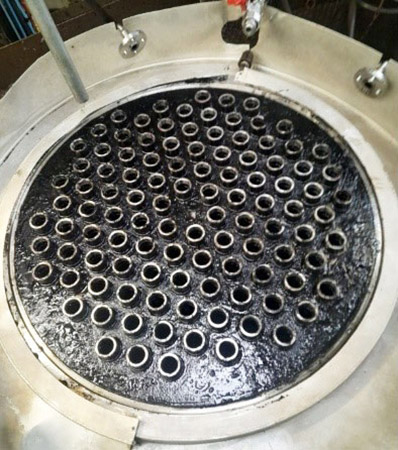
In a chemical unit equipped with a vertical tubular reactor, more than one hundred internal tubes are cleaned each month at very high pressure to remove deposits from the tube walls. The operation involves inserting a VHP hose several meters into each tube and using a water jet at approximately 700 bar to clean the internal surfaces. 

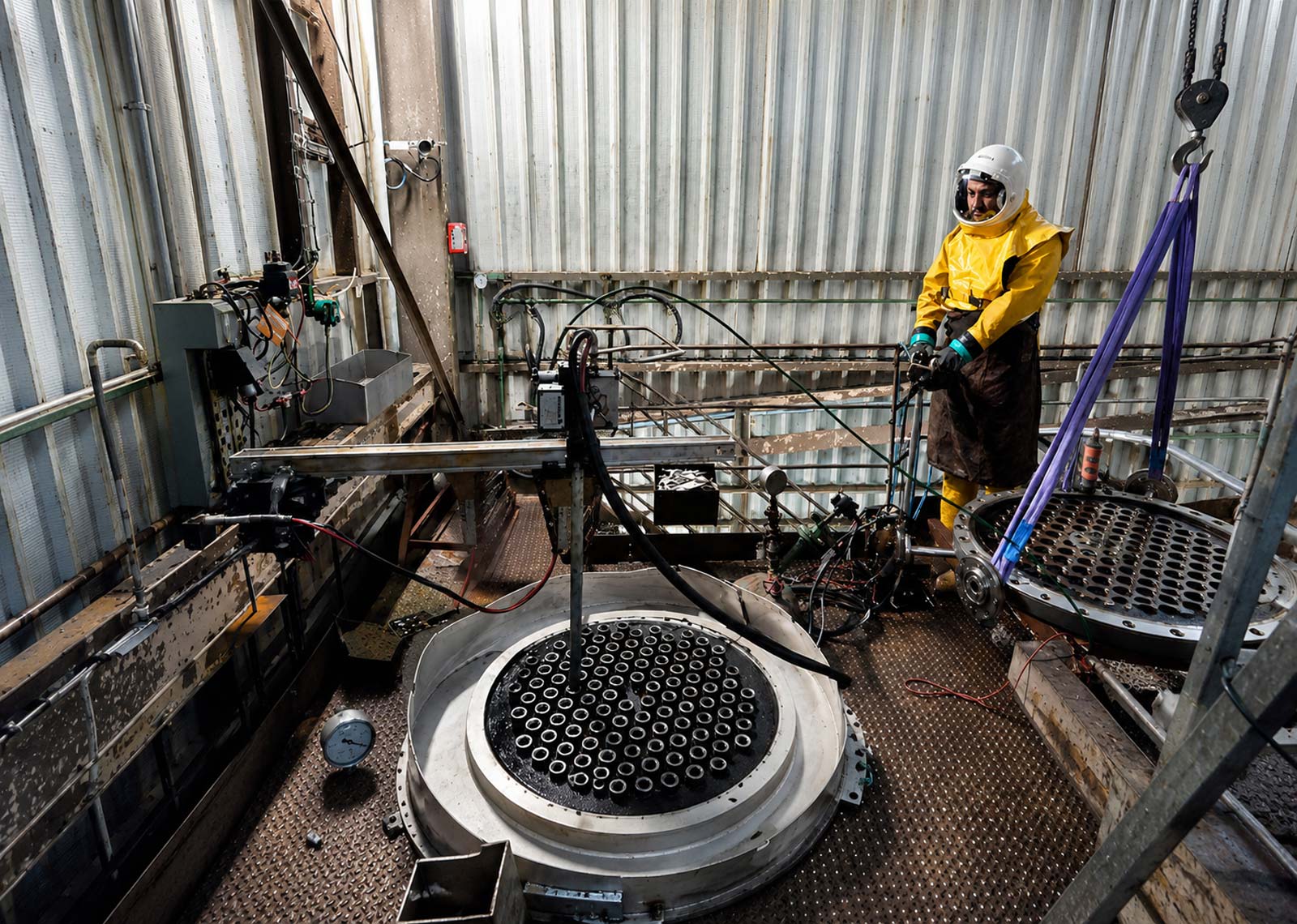
Previously, operators guided the hose manually, directly above the tube bundle. They were required to wear protective equipment to guard against the risks associated with chemicals and very high‑pressure (full‑face helmets, dedicated chemical-resistant suits, reinforced VHP suits, protective gloves, and protective boots). Despite this level of protection, operators remained exposed to splashes of the water/chemical mixture, as well as to the potential consequences of a hose rupture or failure of its crimped fittings. 

In addition to the exposure risks, the working posture was particularly demanding: operators had to work bent over the tubes, in a confined space, under high-temperature conditions, with movement made difficult by the presence of piping and hoses. This environment made the work highly strenuous, increased the risk of musculoskeletal disorders, and raised the risk of same-level falls. 

Objective: Keep Operators Away from Risk

Given these findings, the primary objective was clear: to keep operators away from the combined risks associated with very high pressure and chemical exposure, while maintaining—or even improving—cleaning performance. 

The initiative is built around three main objectives: 

  • Eliminate operators’ direct exposure to VHP jets 
  • Drastically reduce splashes of the water/chemical mixture on equipment and in the work area 
  • Improve workstation ergonomics by limiting awkward postures and physical exertion 

The solution also had to be simple to operate, reliable over time, and easily adaptable to other tubular reactors or equipment requiring repeated high- or very high-pressure cleaning operations. 

The Ortec Solution: Mechanized VHP Cleaning

Flexible nettoyage THP

A Pneumatic Hose Feed System for the VHP Hose

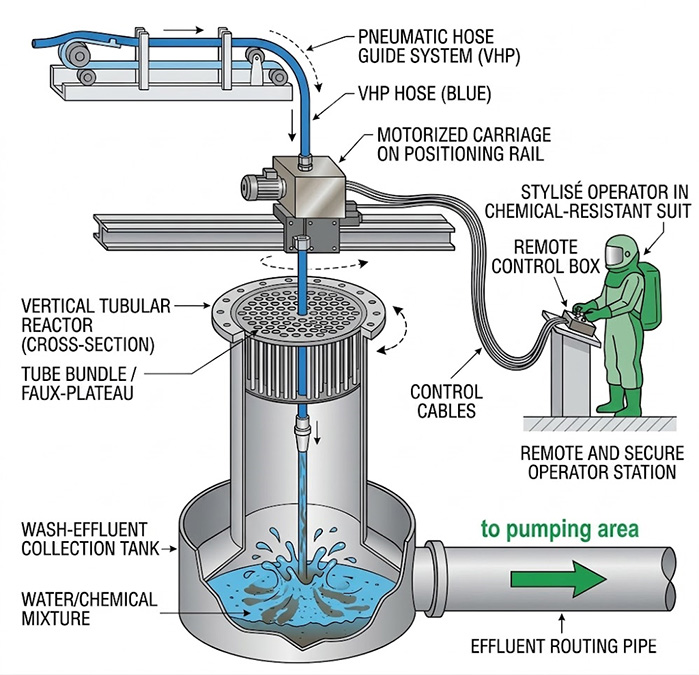
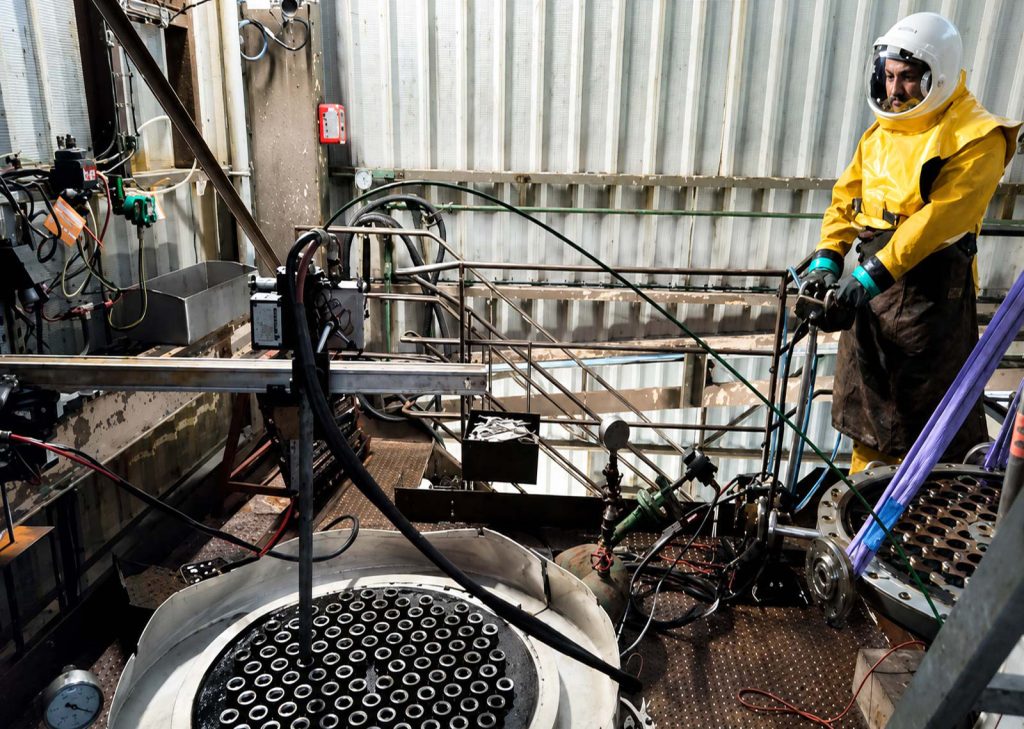
To address these challenges, Ortec designed and deployed a mechanized solution based on a pneumatic feed system for the VHP hose. This machine automatically inserts and removes the hose from each tube of the reactor, controlling both the feed rate and the penetration depth. 

Automating this movement ensures a smooth, repeatable path through each tube, without requiring direct manual operation by operators near the tube bundle

Support mécanisé

Adapted to the Reactor Configuration

The solution was specifically designed and sized for a tall vertical tubular reactor with more than one hundred tubes, each several meters long. A dedicated mechanical support was developed to position the machine above the tubes, ensure its stability, and allow the hose to be aligned successively with each tube. 

The length of the VHP hose guide was adapted to reach all the tubes, while taking into account space and accessibility constraints around the reactor. The system remains compact enough to be integrated into a densely configured environment with piping and equipment. 

Baril de stockage

Controlled Effluent Management

At the same time, a wash-effluent collection and routing system was integrated into the mechanized cleaning system. It collects the water/chemical mixture at the tube outlet and directs it to the designated pumping area. 

This effluent containment reduces dispersion in the work area, limits soiling of surrounding equipment, and reduces the need for additional cleaning after the operation

Panneau de contrôle nettoyage THP

A Remote and Secure Operator Station

With mechanization, the operator’s role has evolved: operators no longer handle the hose manually but control the machine from a secure area, away from the tube bundle. The control station allows them to monitor the key parameters of the operation (feed progress, duration, and tube-by-tube sequences) without direct exposure to VHP jets or splashes. 

This change significantly reduces the strain associated with wearing very heavy protective equipment and improves both operator safety and working conditions during the operation. 

Principle of VHP mechanisation

Principle of VHP mechanization

Results Achieved and Technical Improvements

Pictogramme experience

Improved Cleaning Efficiency

Mechanizing the hose movement ensures a constant, controlled travel speed inside each tube. This precision improves cleaning consistency, reduces insufficiently cleaned areas, and limits residual fouling from one cleaning campaign to the next. 

The system therefore maintains a consistent level of cleanliness across all reactor tubes, supporting process stability and overall performance. 

rapidité temps d'installation

Reduced Operation Time

The industrialization of the operation and reduced manual handling have resulted in an approximately 20% reduction in overall cleaning time per campaign. Keeping the machine in place on the unit eliminates repeated assembly, disassembly, and worksite demobilization operations. 

Teams can focus on preparation, supervision, and quality control of the cleaning process, with a direct impact on equipment availability. 

Pictogramme industrie

Improved Reliability and Optimized Maintenance

Following the initial deployment, the solution was optimized by replacing the components most exposed to the acidic environment (namely steel parts) with stainless steel and plastic parts. These upgrades have reduced corrosion, decreased the frequency of part replacements, and improved the long-term reliability of the machine. 

As a direct result, there are fewer maintenance operations, improved availability of the mechanized cleaning system, and less waste from worn parts. 

Nettoyage THP d'un réacteur tubulaire vertical
Mécanisation du nettoyage THP Ortec : opérateur déporté et sécurisé
Key Benefits of VHP Mechanization
  • Enhanced operator safety through remote operation
  • Significantly reduced exposure to chemicals
  • Optimized operation time (approximately –20%)
  • Consistent, high quality cleaning of tubes
  • Reduced waste generation and lower effluent volumes to manage

Focus

A Replicable Solution
for Industrial Sites

Originally designed for a vertical tubular reactor in a chemical unit, the VHP mechanization solution developed by Ortec is now a benchmark solution for the mechanized cleaning of equipment subject to similar constraints. 

Thanks to its modular design and pneumatic hose feeding principle, the solution can be adapted to various types of equipment: tubular reactors, heat exchangers, columns, or other installations requiring repeated high- or very high-pressure cleaning. 

To support this deployment, Ortec has implemented a dedicated training program for mechanized VHP cleaning, enabling its teams to master the operational, HSE, and technical aspects of this new operating approach. 

Discover Our Industrial Cleaning Solutions

Are you looking to make your very high-pressure cleaning operations safer and enhance the cleaning performance of your tubular equipment or reactors? 

Ortec’s teams design and deploy custom VHP mechanization solutions tailored to your processes, HSE requirements, and industrial environment. 

Read more about applied innovations

Interested in our VHP cleaning solutions?

We’re ready to assist you!